Built By Berger
Berger Board Butter, Cutting Board Wax & Conditioner
Berger Board Butter, Cutting Board Wax & Conditioner
Couldn't load pickup availability
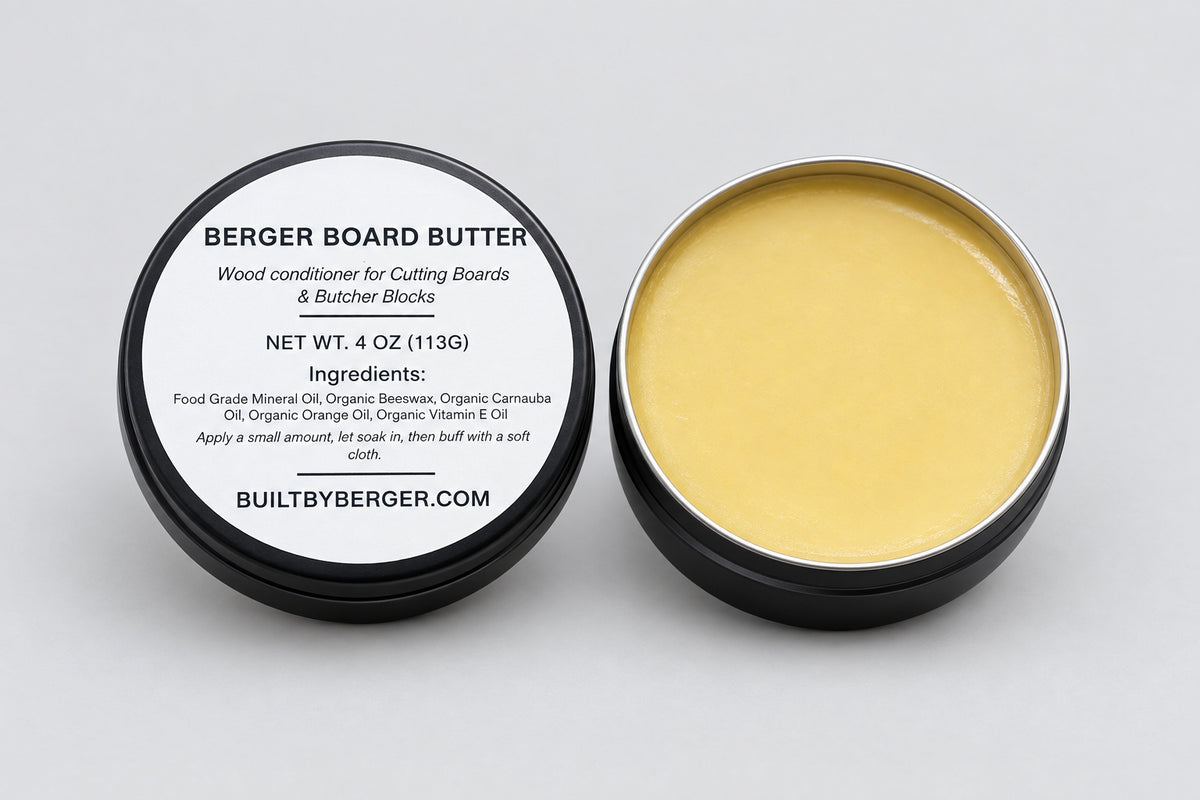
Most board butters are two ingredients: an oil and a wax. This one is five. Organic beeswax and organic carnauba wax build a harder, longer-lasting seal, USP food-grade mineral oil conditions the wood, organic orange oil keeps the finish clean, and organic vitamin E keeps it all fresh. Every board I build soaks in mineral oil overnight, then gets finished with this exact butter.
- Two waxes, beeswax and carnauba, for a tougher finish
- Made with certified organic waxes and oils
- Food-safe for cutting boards, butcher blocks, and wooden utensils
- 4 oz tin, or a 3-pack to keep one at the sink
What's in the tin, and why
USP food-grade mineral oil. The conditioner. It soaks into the grain to replace moisture lost to washing, and it never goes rancid, so your board won't pick up an off smell over time.
Organic beeswax. The seal. Beeswax settles into the surface of the wood and gives water something to bead up on instead of soaking in. It's the base of nearly every cutting board wax for a reason.
Organic carnauba wax. The part most board butters skip. Carnauba comes from the leaves of a Brazilian palm and is the hardest natural wax there is. Blended with beeswax, it gives the finish more durability and a deeper sheen, so protection holds up longer between coats.
Organic orange oil. Adds a faint, clean citrus scent and helps the butter spread and work into the grain. The scent is gone once the finish cures, so nothing carries over to your food.
Organic vitamin E oil. A natural antioxidant that keeps the plant-based ingredients from breaking down, so the last scoop in the tin works like the first.
Two waxes, not one
| Typical board butter | Berger Board Butter | |
|---|---|---|
| Oil | Mineral oil or coconut oil | USP food-grade mineral oil |
| Wax | Beeswax only | Organic beeswax and organic carnauba wax |
| Organic ingredients | Rarely | Beeswax, carnauba, orange oil, and vitamin E |
| Scent | Unscented | Faint citrus, gone once cured |
| Ingredient list | Often a "proprietary blend" | Every ingredient, and why it's there |
How to use it
- Start with a clean board that's completely dry.
- Scoop a small amount onto a soft, lint-free cloth.
- Work it into every surface in small circles, including the edges and underside.
- Let it sit for 20 minutes, or overnight for a board that looks thirsty.
- Buff off the excess until the surface feels smooth, not tacky.
Repeat every month or two, or sooner if water stops beading on the surface. For a brand-new or very dry board, soak it in plain mineral oil overnight first, then follow with the butter. That's how every board in the shop gets finished. Full routine on the Board Care page.
Specs
- Size: 4 oz tin, or a 3-pack of 4 oz tins
- Ingredients: USP food-grade mineral oil, organic beeswax, organic carnauba wax, organic orange oil, organic vitamin E oil
- Finish: Satin sheen
- Scent: Faint citrus, gone once cured
- Use on: Cutting boards, butcher blocks, charcuterie boards, wooden spoons, utensils, and bowls
- Made in: Peoria, Arizona, in small batches
- Storage: Cool, dry place with the lid on
FAQ
Is Berger Board Butter food safe?
Yes. The mineral oil is USP food grade, every other ingredient is food-safe, and once it's buffed out, your board is ready to use.
What's the difference between cutting board oil and cutting board wax?
Oil soaks into the wood and conditions it. Wax stays near the surface and seals it. A board butter does both in one step. Plain mineral oil is best for bringing a new or dried-out board back to life; board butter is for regular upkeep after that.
Why use both beeswax and carnauba?
Beeswax is soft and easy to work into the grain, but it wears off faster on its own. Carnauba is much harder. Together you get a butter that's easy to apply and a finish that lasts longer between coats.
What's the ratio?
Roughly one part wax to five parts oil, with about three times as much beeswax as carnauba and just a touch of orange oil and vitamin E. Enough wax to set up firm in the tin, enough oil to still work down into the grain.
Why mineral oil and not coconut or olive oil?
Cooking oils like olive oil and regular coconut oil can go rancid inside the wood and leave a sour smell. Food-grade mineral oil is tasteless, odorless, and stays stable, which is why it's the standard for butcher blocks.
Will the orange oil make my food taste like citrus?
No. The scent is faint when you apply it and gone once the finish cures.
How often should I use it?
Every month or two for a board in daily use, or whenever the wood looks pale or water stops beading on it.
Can I use it on other wood?
Yes. It works on any bare or oil-finished wood that touches food: spoons, utensils, bowls, and butcher block countertops. Skip it on furniture with a lacquer or polyurethane finish, where it can't soak in.
Share